
Membranes That Prevent Pooling Water Damage
Flat Roofing in Ogden for low-slope commercial buildings and modern residential structures
Pooling water sits on flat and low-slope roofs for hours or days after rainstorms, gradually penetrating seams and flashing where inferior installation allowed gaps. High North Roofing installs TPO, PVC, and Duro-Last commercial-grade membranes with heat-welded seams that create continuous waterproof barriers across the entire roof plane, eliminating the mechanical fastener penetrations that eventually leak on older built-up systems. The crew inspects sub-decking for moisture intrusion or rot before membrane placement, ensuring the underlying structure can support the new system without deflection that stresses seams and creates low spots where water accumulates.
Installation involves mechanically attaching or fully adhering the membrane to prepared decking, then heat-welding all seam overlaps using specialized equipment that fuses the thermoplastic material into monolithic sheets. Custom-fitted edge flashing wraps parapet walls and roof perimeters, and all penetrations—vents, drains, HVAC curbs—receive boot flashing that integrates with the field membrane through additional heat welds. Proper drainage slope is verified during installation to confirm water flows toward scuppers and drains rather than ponding in roof sections, a critical step often skipped on rushed commercial projects.
Schedule a property evaluation to identify drainage issues and assess existing membrane condition.
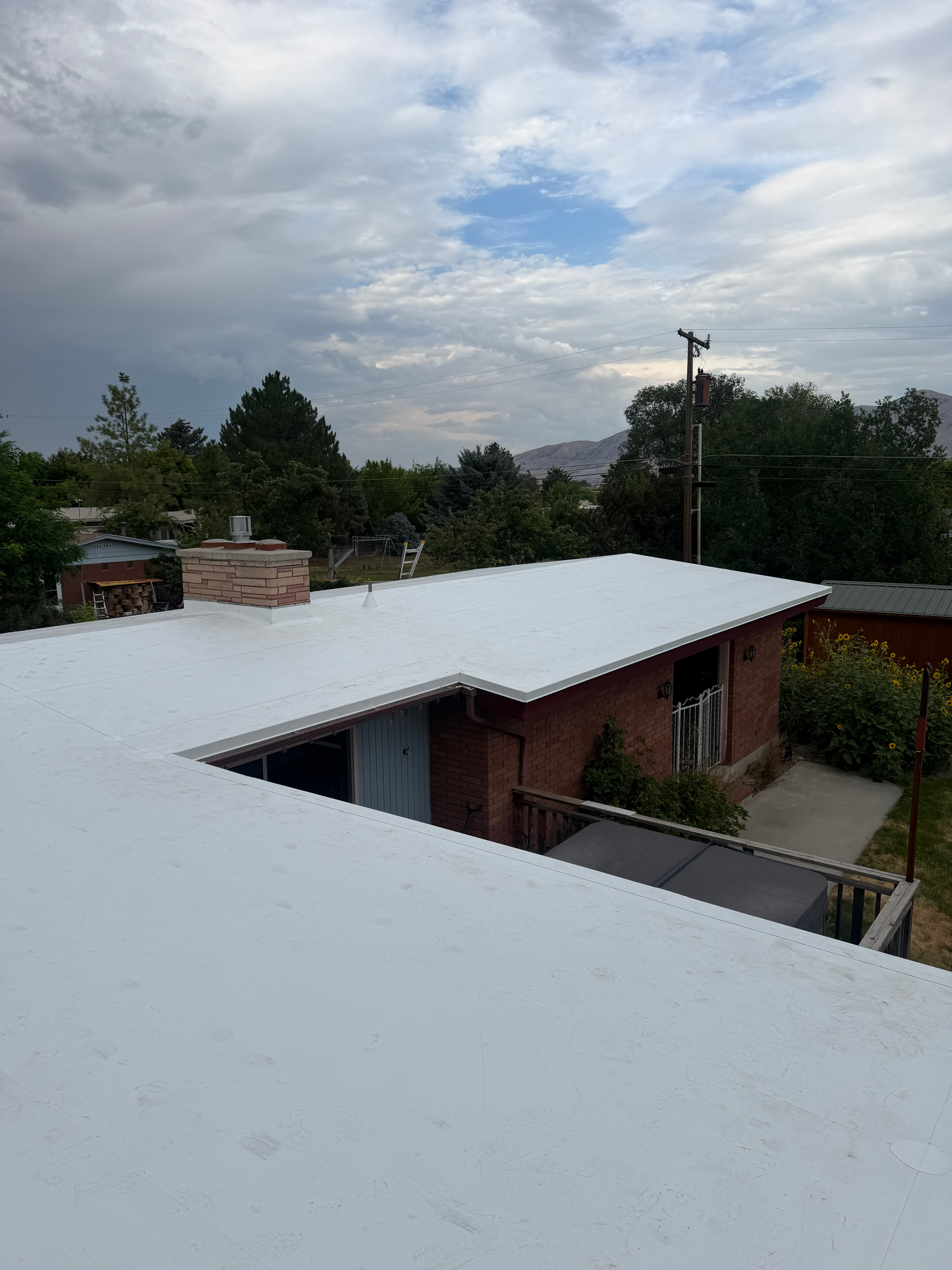
What Changes After Membrane Installation Completes
Heat-welded seams form bonds stronger than the base membrane material itself, preventing the seam separation that causes catastrophic leaks on mechanically fastened or adhesive-sealed systems after three to five years. Light-colored TPO and PVC membranes reflect seventy to eighty percent of incoming solar radiation, dropping roof surface temperatures by thirty to fifty degrees compared to dark built-up roofing and significantly reducing the cooling load on Ogden commercial buildings during summer months. Proper ventilation integration and insulation placement beneath the membrane prevent condensation buildup that rots decking from below, a common failure mode in older flat roof assemblies.
After installation, you notice that interior ceiling stains stop expanding and new water spots no longer appear following rainstorms. HVAC systems cycle less frequently because roof heat gain decreases, and utility bills drop measurably during peak summer months. The roof surface sheds water quickly toward drains, and ice dams no longer form along parapet walls because balanced heat distribution prevents the freeze-thaw cycling that creates ice buildup on poorly insulated low-slope roofs.
The service includes complete membrane installation with heat-welded seams, custom flashing for all penetrations, and edge termination bars, but excludes structural decking replacement, insulation upgrades beyond code minimum, and HVAC equipment relocation. Based along the Wasatch Front, High North Roofing provides free inspections and develops targeted repair plans for business owners needing to extend existing membrane life before full replacement becomes necessary.
Answers to Frequent Service Questions
Commercial property managers and modern homeowners in Ogden often ask about flat roofing materials and maintenance requirements before starting projects.
What makes TPO and PVC superior to traditional built-up roofing?
TPO and PVC single-ply membranes install faster with fewer seams, resist UV degradation better than asphalt-based materials, and use heat-welded joints that create permanent watertight bonds rather than relying on adhesives that fail when exposed to ponding water and thermal cycling.
How does heat-welding create stronger seams than mechanical fasteners?
Heat-welding melts the membrane material at overlapping edges and fuses the layers into a single monolithic sheet with bond strength exceeding the membrane's tear resistance, eliminating the fastener penetrations and tape adhesion failures that cause ninety percent of flat roof leaks within the first decade.
When should I schedule membrane replacement versus targeted repairs?
Full replacement becomes necessary when more than thirty percent of the roof shows seam separation, widespread membrane shrinkage, or multiple active leak points scattered across different zones, indicating systemic failure rather than isolated damage repairable through patching and flashing renewal.
What drainage slope prevents water pooling on flat roofs?
Code requires minimum one-quarter inch of slope per foot of run toward drains, but High North Roofing targets one-half inch per foot on Ogden installations to account for decking deflection over time and ensure positive drainage even as structural settling creates minor low spots.
Why do some flat roofs develop leaks years after installation?
Delayed leaks typically trace to improperly sealed penetration flashing, inadequate edge termination that allows wind-driven rain beneath the membrane, or thermal movement stress at parapet walls where rigid flashing cracks and separates from flexible field membrane, all preventable through correct detail work during original installation.
High North Roofing provides thorough damage inspections with thermal imaging to locate hidden moisture and offers tailored preventive maintenance plans that extend membrane lifespan. Request a detailed estimate to review system options and timeline considerations for your commercial facility.